

 View Products


Last updated: September 3, 2026

Most financial advisors don’t struggle with skill or knowledge. They struggle with pipeline. Survey data on advisor marketing needs shows that 82.5% say they don’t have enough qualified leads to talk to each month, and an even larger share admit they lack a cost-effective way to fix it. That gap between expertise and prospect flow is where most advisory practices stall out.
The methods below cover both paid and organic ways to build a steady stream of financial advisor leads, along with realistic cost expectations and who actually needs this kind of lead generation.
What are Financial Advisor Leads?
Financial advisor leads are potential clients interested in investment or financial planning services. These leads represent individuals actively seeking guidance from financial professionals to manage their wealth effectively.
Leads matter because they’re the direct pathway to growing a client base. According to industry data, 88% of advisors are actively involved in converting leads into clients themselves rather than handing that job off. That level of hands-on involvement is exactly why lead quality and lead management process matter as much as lead volume — a bad list wastes an advisor’s own time, not just a marketing budget.
How to Get the Financial Advisor Leads
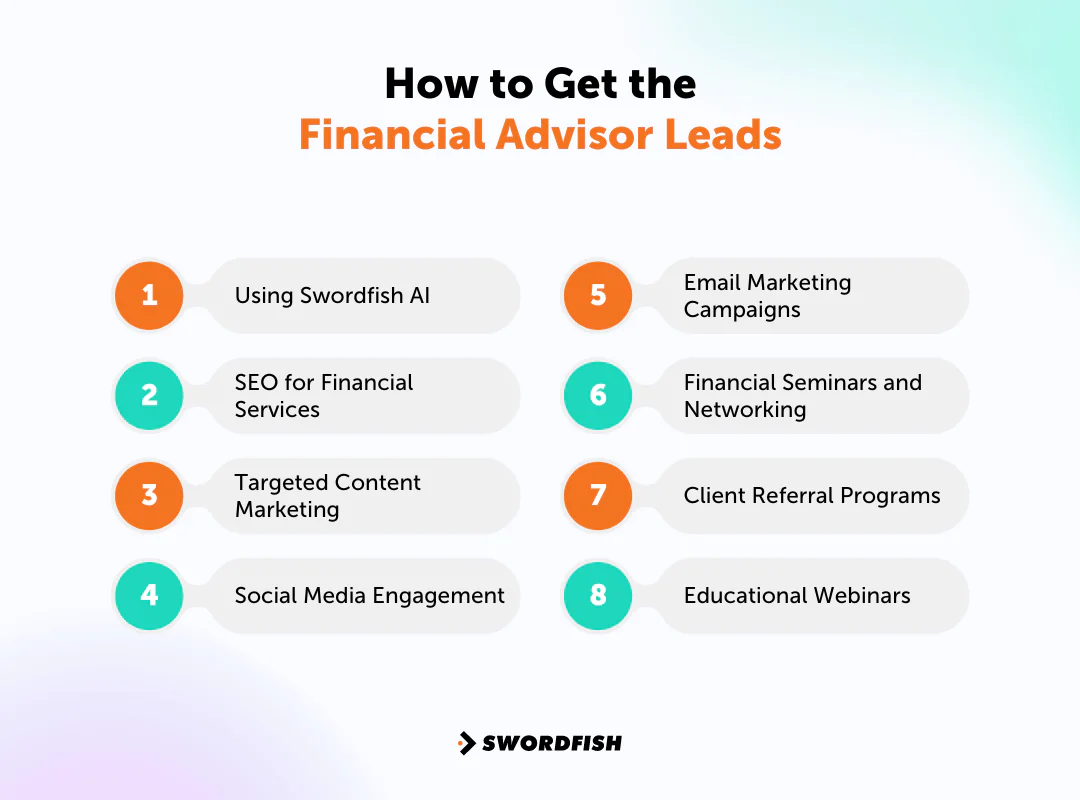
Social media, networking events, and SEO are the obvious starting points for attracting financial advisor leads. But relying on any one channel alone tends to produce inconsistent results. The eight methods below, used together, give advisors a more reliable mix of paid and free lead sources.
1. Using Swordfish AI: Get the Best Financial Advisor Leads
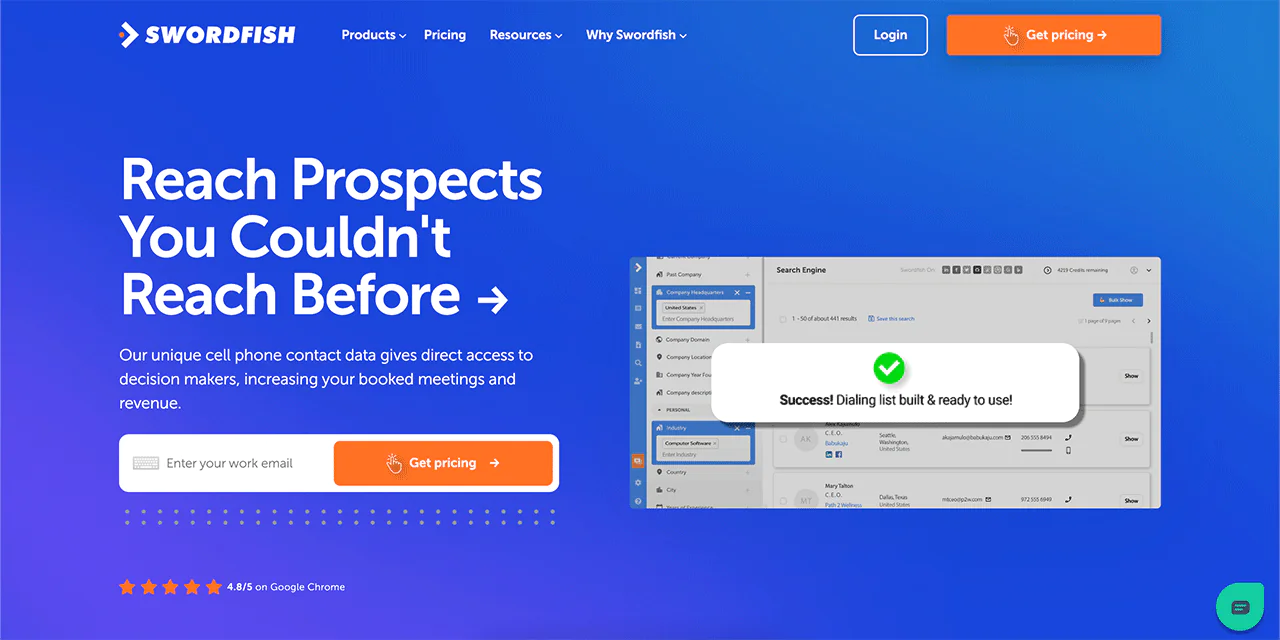
Swordfish AI gives advisors access to a database of over 3.5 billion profiles, with contact details including cell phone numbers and mailing addresses. The platform is built for accuracy — it claims to be 33% better at locating cell phone numbers and 45% more precise than competing tools, which matters when a single bad number can cost an advisor a warm prospect.
The Chrome extension pulls contact data directly from LinkedIn and Facebook while you browse, cutting down on manual research. Advanced search filters let you narrow prospects by criteria like potential equity and historical data, so you’re not sifting through irrelevant contacts. Automated campaign tools with templates and tracking help keep leads warm through the nurturing process, rather than letting them go cold after the first outreach attempt.
Key Features of Swordfish AI
Here’s a closer look at the features that support lead generation for financial advisors:
Prospector
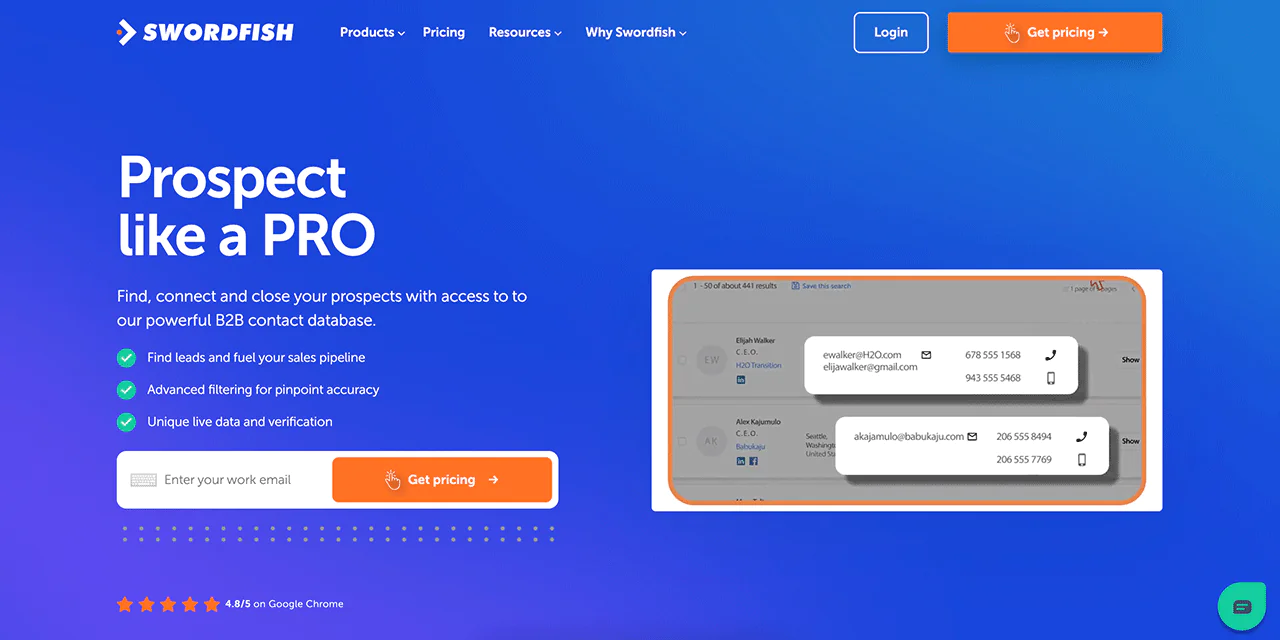
The Prospector feature filters the database by specific criteria, so you spend less time on unqualified contacts and more time on prospects who actually match your ideal client profile.
Chrome Extension
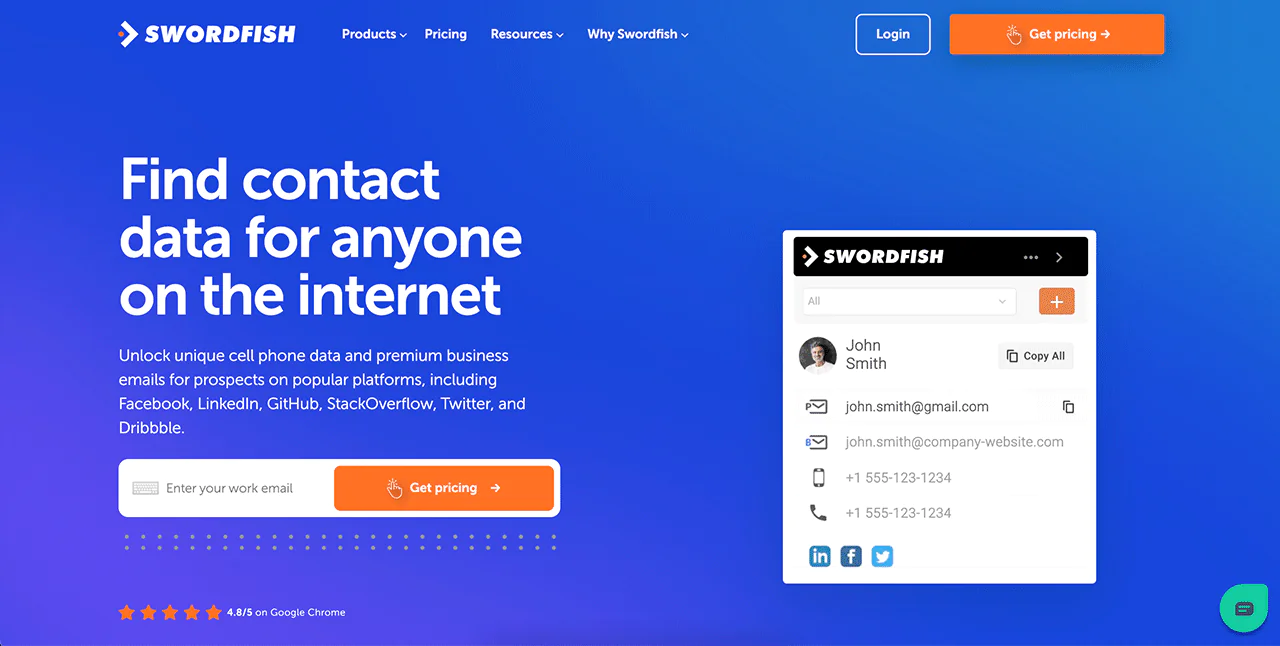
The Swordfish AI Chrome Extension pulls contact details straight from LinkedIn and Facebook profiles as you browse, which speeds up list building considerably compared to manual lookups.
Bombora Intent Data
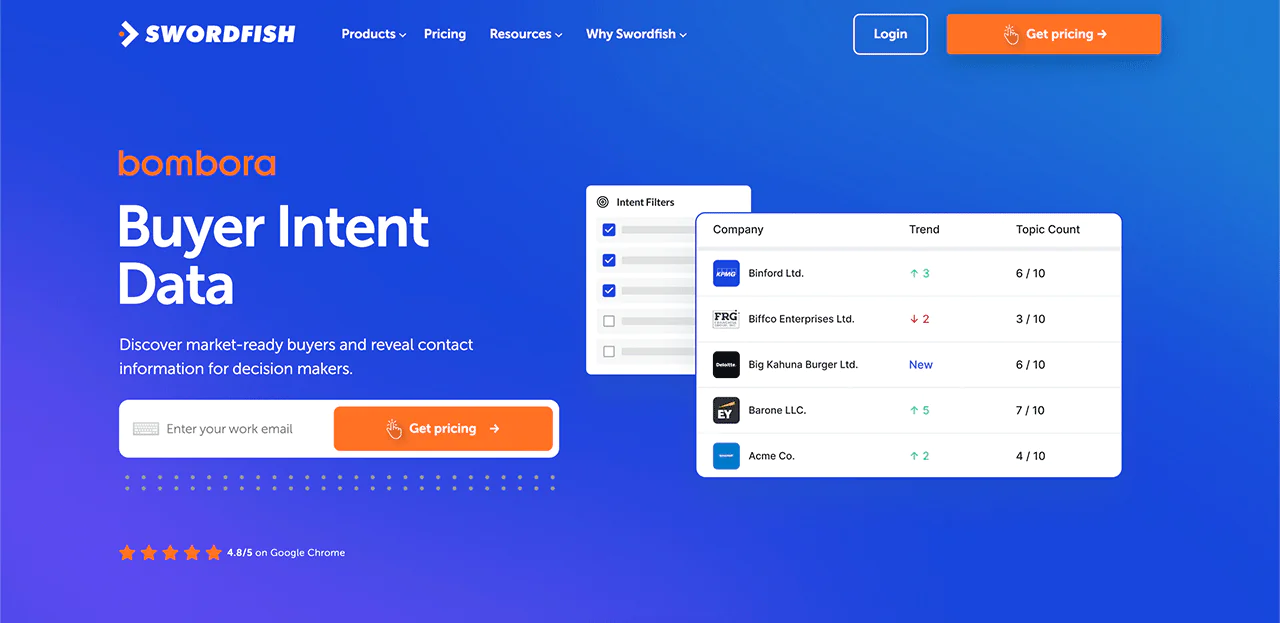
Bombora® Intent Data flags companies actively researching financial services, so outreach can be targeted toward prospects already showing interest rather than cold contacts.
Reverse Search
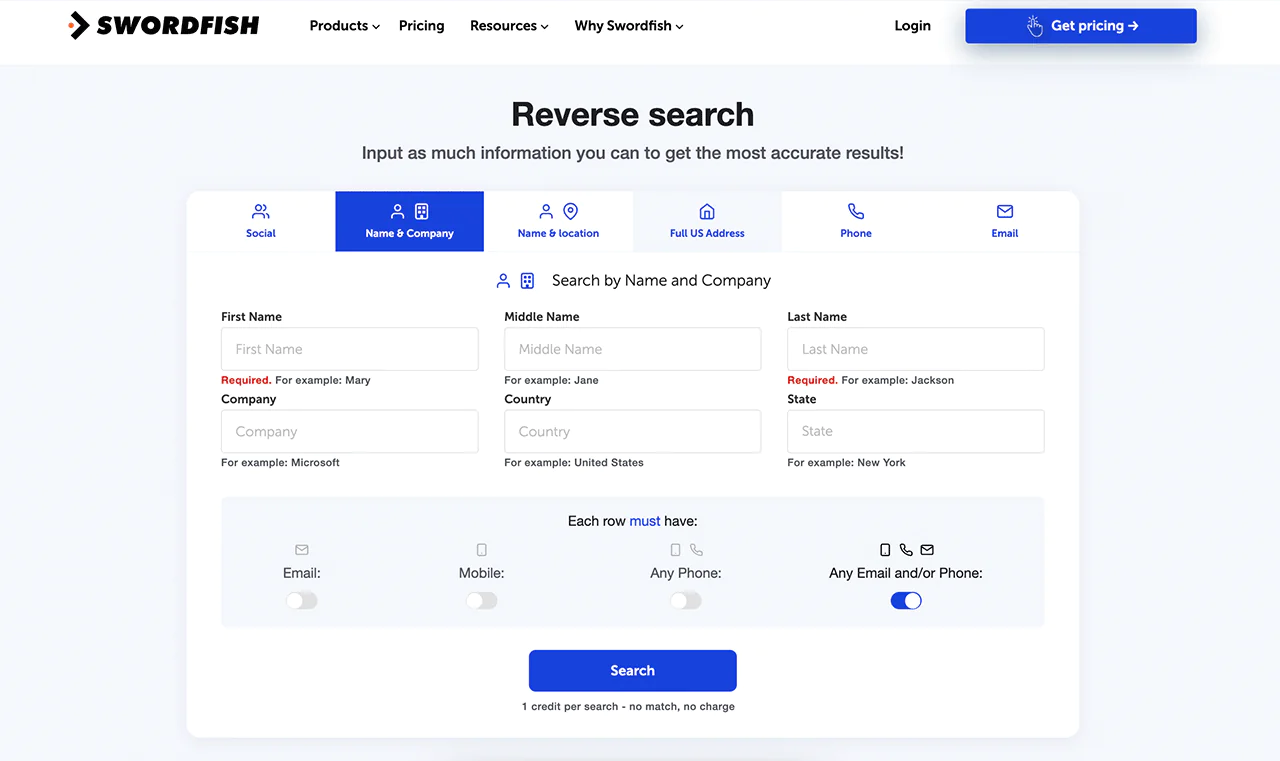
If all you have is a partial contact record, Reverse Search fills in the missing pieces. Enter an email or phone number and the tool completes the rest of the contact profile.
File Upload
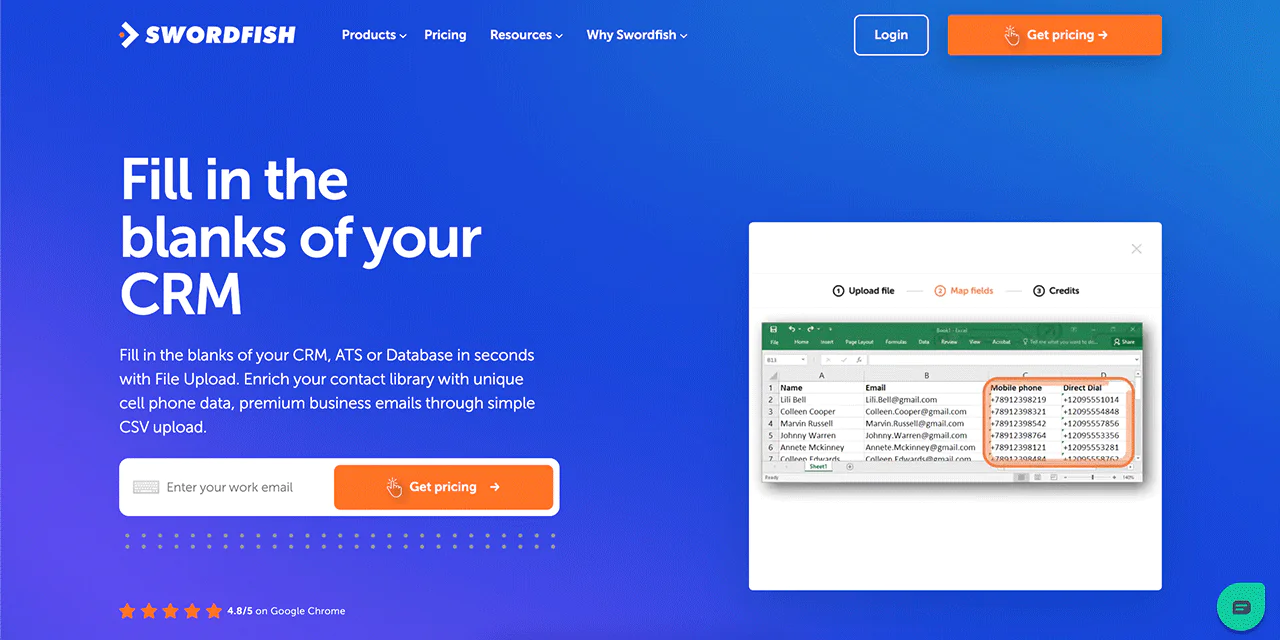
The File Upload feature enriches existing contact lists with additional data from Swordfish AI’s database, useful for advisors who already have a partial list that needs updating.
API Integration
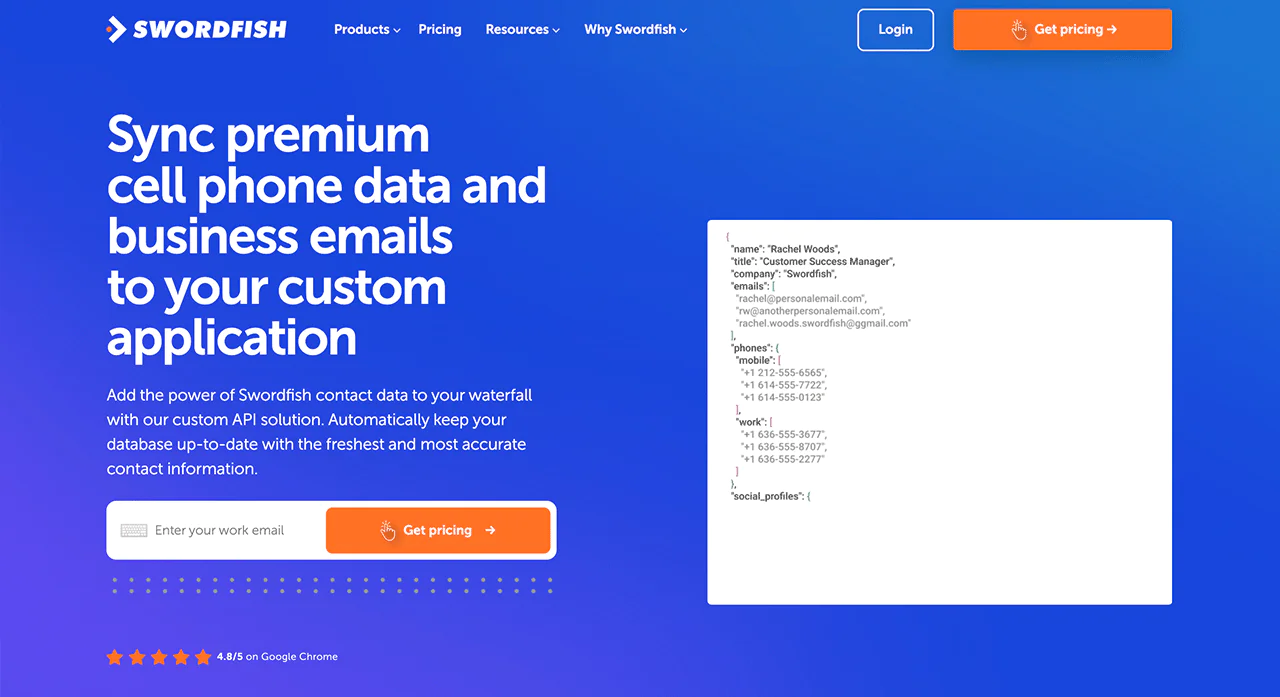
The API connects Swordfish AI directly into an existing CRM or marketing stack, so lead data updates automatically instead of requiring manual entry.
 Try Swordfish Ai
2. SEO for Financial Services
Search engine optimization helps financial advisors get found by people already searching for help. Working keywords like “investment strategies,” “personal finance advice,” and “retirement planning tips” into your content naturally is still one of the more reliable ways to build organic visibility.
Mobile searches for “what should I invest in?” have increased by 65% year-over-year, which signals real demand behind these queries — worth targeting whether through organic content or paid search.
Consistent, high-quality content that speaks to real client concerns tends to outperform generic posts. An article like “How to Manage Your Investments During Economic Downturns” pulls in traffic from people actively worried about a specific problem, which tends to convert better than broad, unfocused content. Regular publishing also keeps search rankings stable over time, making it easier for prospects to find you when they’re ready.
3. Targeted Content Marketing
Content marketing means creating and distributing consistent, relevant material aimed at a clearly defined audience. A blog series on estate planning complexities or a set of videos explaining investment strategies both work toward the same goal: establishing authority on topics your ideal clients actually care about.
The content that performs best answers a specific question or worry a prospect already has, rather than covering general financial topics. Advisors who do this consistently tend to see more inbound consultation requests over time.
4. Social Media Engagement
LinkedIn, Twitter/X, and Facebook give advisors a direct line to prospects who are already researching financial guidance. Sharing useful articles and joining relevant conversations builds visibility with people actively looking for advice.
A recurring format helps — something like a weekly “Money Management Mondays” Facebook Live where you answer common questions builds a habit among followers and reinforces your credibility over time. As that trust builds, followers become more likely to reach out when they actually need help.
Financial services account for over 14% of overall spend in online advertising, underscoring how central digital engagement has become to this industry.
5. Email Marketing Campaigns
Email remains one of the most durable ways to stay in front of leads without being pushy. Personalized advice, trend updates, and timely follow-ups all create repeated touchpoints that keep your name top of mind.
A practical example: after a webinar on “Investment Strategies for Uncertain Times,” a short follow-up email series that expands on the topics discussed, with added resources or a feedback request, keeps the conversation going without forcing a sales pitch. Each email should reinforce your expertise and nudge recipients toward booking a consultation.
This approach fills the gap between major campaigns and builds a pipeline of warm leads who already recognize your expertise.
Email marketing’s return on investment is frequently cited as strong across industries — $1 invested in email marketing is often reported to return around $42, which speaks to how cost-effective the channel remains for advisory outreach.
6. Financial Seminars and Networking
Hosting or attending seminars puts you in front of an audience that’s already interested in financial guidance, not one you have to convince to care. A seminar titled “Investment Opportunities in the Current Market” draws people curious about timely topics and positions you as someone worth listening to.
Offering a free consultation to attendees turns initial curiosity into a concrete next step. These events also build the kind of personal rapport that’s harder to establish through digital channels alone.
7. Client Referral Programs
Referral programs turn your existing clients into an extension of your marketing. Incentives like a service discount or gift card for each successful referral give clients a reason to actively recommend you rather than just mentioning you in passing.
A 10% discount per referral, for example, gives clients tangible motivation to introduce you to people in their network who might need advisory services. This approach extends your reach through relationships people already trust, while reinforcing loyalty among current clients.
8. Educational Webinars
Webinars let you demonstrate expertise to a wider audience than a one-on-one meeting ever could. A session on “Maximizing Your Retirement Savings” pulls in people actively trying to improve their financial position.
Offering a consultation at the end of the session turns passive attendees into active leads. Done well, a webinar isn’t just informational — it opens a dialogue that makes participants feel like the advisor understands their specific situation, which makes them more receptive to a follow-up conversation.
Who Needs Financial Advisor Leads?
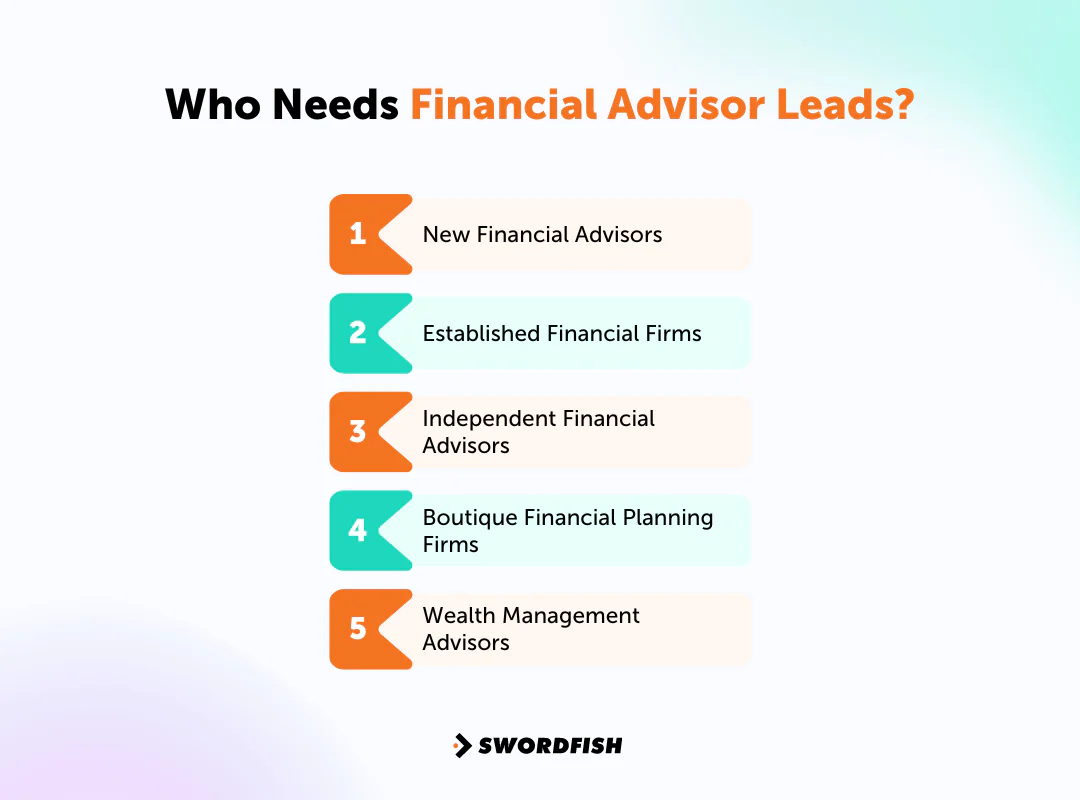
Lead generation matters differently depending on where an advisor or firm sits in the market. Here’s a breakdown:
New Financial Advisors
Advisors just starting out need a steady flow of leads to build a client base from scratch. Without it, there’s no foundation for long-term relationships or referral momentum.
Established Financial Firms
Even mature firms lose clients over time to attrition, relocation, or life changes. Fresh leads keep growth from stalling and offset natural client turnover.
Independent Financial Advisors
Without the marketing resources or brand recognition of a large firm behind them, independent advisors depend heavily on consistent lead generation just to stay competitive.
Boutique Financial Planning Firms
Firms serving niche markets need leads that actually match their specialty. Generic lead volume doesn’t help if the prospects don’t fit the firm’s particular expertise.
Wealth Management Advisors
Advisors focused on high-net-worth clients need leads suited to complex financial strategies. Growing assets under management depends on consistently finding the right caliber of prospect.
How Much Does Financial Advisors Leads Cost?
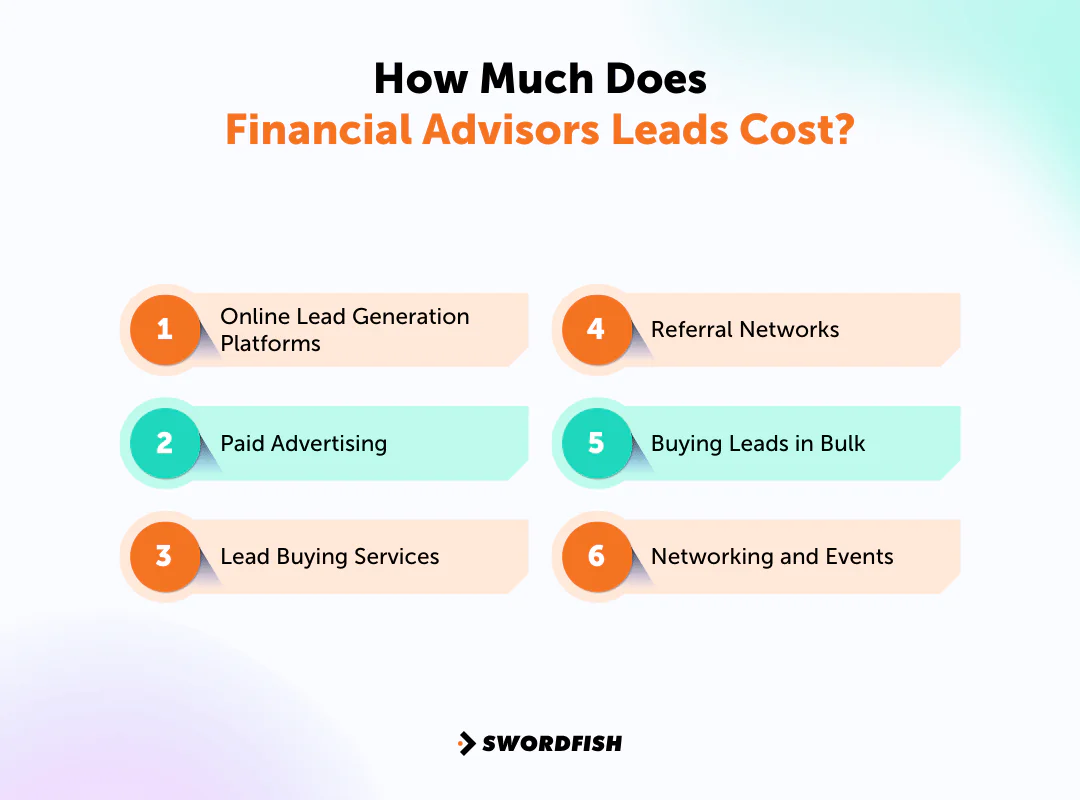
Lead cost varies a lot depending on source, quality, and how much vetting has already been done. Here’s a general breakdown advisors can use to budget:
Online Lead Generation Platforms
Platforms specializing in financial services leads typically charge $20 to $100 per lead, with price scaling based on how thoroughly leads are vetted.
Paid Advertising
Google Ads or Facebook Ads campaigns tend to run $50 to $250 per lead depending on keyword competition and targeting precision. Not every lead from paid ads converts, so factor that into cost-per-acquisition math.
Lead Buying Services
Services selling pre-qualified leads charge more — often $100 to $300 per lead — because those leads carry a higher expected conversion rate.
Referral Networks
Referral networks usually combine a membership fee with a success fee tied to conversions, so total cost depends heavily on how many referred leads actually become clients.
Buying Leads in Bulk
Buying in volume brings the per-lead price down, often to the $20 to $100 range, making it a reasonable option for larger firms running bigger campaigns.
Networking and Events
Costs here are less direct — entry fees, travel, and time — but they still factor into the overall cost of acquiring a lead, even if that cost is harder to calculate precisely.
Conclusion
Generating qualified financial advisor leads takes a mix of channels working together, not a single silver-bullet tactic. The strategies above, used in combination, give advisors a more reliable and diversified pipeline than relying on referrals alone.
For advisors looking to streamline the data side of lead generation, Swordfish AI’s targeting tools and contact database can help connect with prospects more efficiently.
To buy an email list of financial advisors, check out our Financial advisor email list for more details.
Frequently Asked Question
What tools can help manage and track financial advisor leads?
CRM systems are essential for managing, tracking, and nurturing leads through the sales funnel. These systems organize lead information, track interactions, and automate follow-up so opportunities don’t get missed.
What are some common challenges in generating leads for financial advisors?
High competition, capturing genuinely qualified prospects, and nurturing leads through to conversion are the recurring pain points. Advisors need a clear point of differentiation and a consistent follow-up process to keep prospects engaged.
Is email marketing effective for financial advisor lead generation?
Yes. Email allows for targeted, ongoing communication that keeps an advisory practice top of mind. Consistent, valuable content in email form tends to strengthen relationships with leads and improve conversion over time.