
 View Products


- Core concept
- Lever alternatives are ATS/CRM platforms that replace Lever’s ATS/CRM workflow. Use workflow-first ATS selection to pick the system that reduces time-to-schedule, protects candidate experience, and supports compliance.
- Key stat
- Most ATS/CRM dissatisfaction shows up as measurable friction: slower scheduling, lower reply rates from passive candidates, and more manual steps per hire.
- Ideal candidate profile
- Heads of Talent, TA Ops, and Recruiting leaders evaluating Lever alternatives who want a better ATS/CRM fit without losing reachability for hard-to-reach roles and silver medalists.
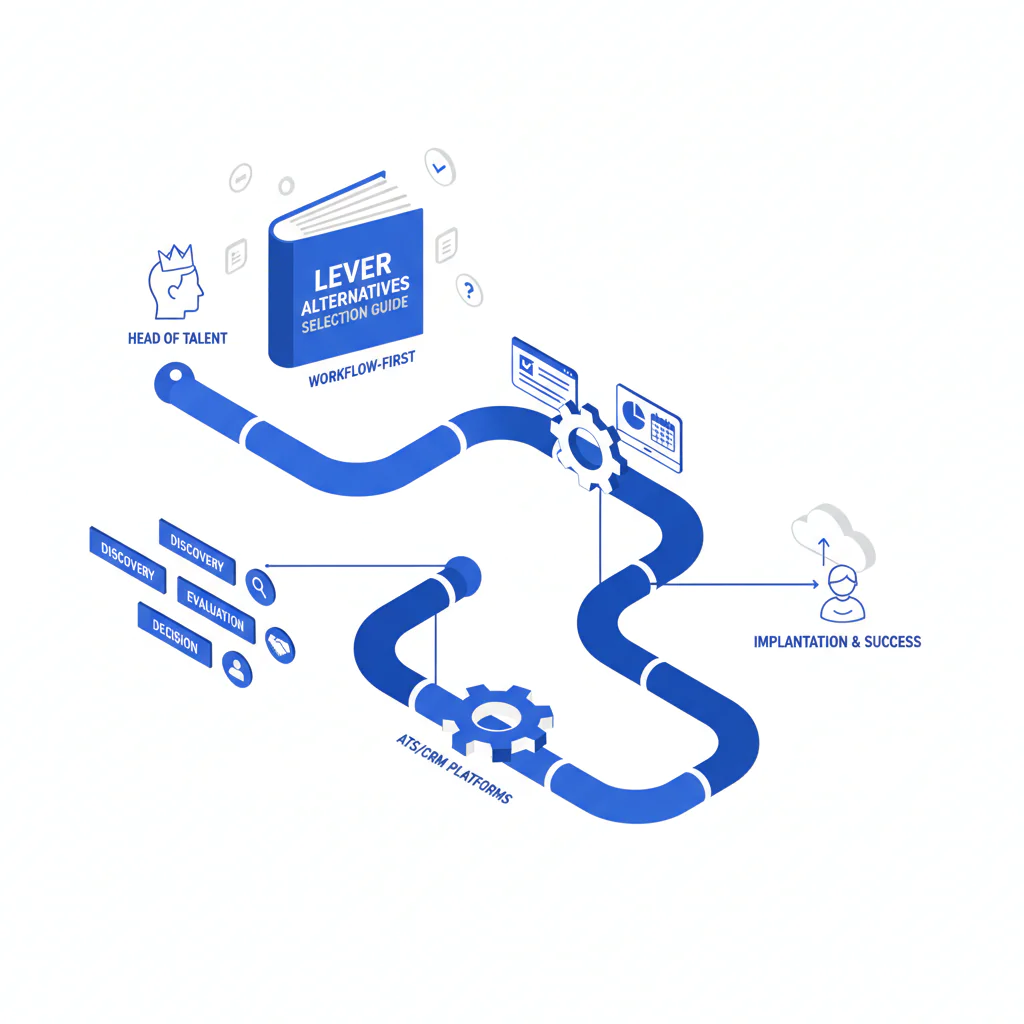
Lever Alternatives: A Head of Talent’s Workflow-First ATS/CRM Selection Guide
By Ben Argeband, Head of Talent (Operator Perspective)
I treat ATS CRM alternatives as workflow decisions: the right choice reduces time-to-schedule and prevents duplicate outreach that damages candidate experience. This page is the workflow-first selection method; the linked page is the shortlist.
If you want a shortlist of tools to compare, start with top 10 best recruiting software. Use this guide to run a pilot that shows whether a new ATS/CRM actually improves recruiter throughput.
Who this is for
- Recruiting leaders who need an ATS/CRM workflow that matches how recruiters source, follow up, schedule, and close.
- Teams hiring for hard-to-reach roles where speed depends on fast outreach and fast scheduling.
- Organizations that re-engage silver medalists and need clean tagging, reminders, and ownership rules.
- TA teams coordinating with agency recruiting partners and need attribution, dedupe, and submission controls.
- Teams with compliance requirements that need auditability, retention controls, and permissioning.
What recruiters are trying to accomplish
- Placement speed: reduce time-to-first-touch and time-to-schedule by removing manual handoffs.
- Candidate experience: fewer duplicate messages, faster updates, and clear next steps.
- Pipeline management: stages and ownership that reflect reality so reporting is usable.
- Compliance: consistent logging, access controls, and retention policies that stand up to review.
Decision heuristic: if recruiters spend more time updating the system than moving candidates, the ATS/CRM workflow is misaligned. If recruiters spend more time hunting for contact details than speaking with candidates, you’re missing a contact data layer.
Sourcing workflow
This is the workflow-first ATS selection framework I use to evaluate Lever alternatives without getting pulled into feature comparisons that don’t change outcomes.
Step 1: Map your ATS/CRM workflow as it is. Write down the real steps from sourcing to offer: sourcing, enrichment, outreach, follow-up, scheduling, feedback, offer, and re-engagement. Include where the process breaks for passive candidates.
Step 2: Classify the bottleneck.
- Workflow friction: too many clicks, unclear ownership, weak scheduling flow, or automation that doesn’t match your recruiting workflow.
- Reachability friction: low reply rates because contact details are missing, outdated, or scattered across tools.
- Process risk: inconsistent stage usage, missing audit trail, or unclear retention/consent handling.
Step 3: Separate the system of record from the system of reach. Your ATS software should be the system of record for pipeline management and compliance. Reachability is improved by a contact data layer that enriches candidate records and supports consistent outreach across tools.
Step 4: Pilot with metrics, not opinions. Run a two-week pilot and track time-to-first-touch, reply rate, time-to-schedule, and recruiter minutes per candidate. Your target direction is simple: time-to-schedule down, reply rate up, and fewer touches per scheduled interview.
Step 5: Keep outreach consistent during the pilot. Use the same outreach templates and follow-up timing across systems so you can attribute changes to workflow and data quality, not copy differences.
Ethical use of phone numbers
Phone and text outreach can reduce time-to-schedule, but it can also create complaints if it feels unexpected. Ethical use needs rules that protect candidates and protect your team.
- Purpose limitation: use calls/texts for time-sensitive steps (scheduling, offer coordination) and for candidates who have signaled interest, including silver medalists you are re-engaging.
- Consent and opt-out: include opt-out language in texts and honor channel preferences immediately.
- Logging: record outreach activity in the ATS/CRM workflow so candidates don’t get duplicate messages from different recruiters.
- Access control: restrict who can view personal contact details and review permissions regularly.
Checklist: Diagnostic Table
| Symptom | Likely root cause | What to check in your ATS/CRM workflow | Fix that improves placement speed |
|---|---|---|---|
| Low reply rate from passive candidates | Contact details missing/outdated; channel mismatch | What % of sourced profiles have verified email + mobile? Are channel outcomes tracked? | Add a contact data layer; standardize first-touch sequence by role type |
| Candidates complain about too many messages | Duplicate outreach across recruiters or tools | Ownership rules, dedupe, and whether activity is logged in one place | Enforce ownership + dedupe; centralize outreach logging to protect candidate experience |
| Scheduling takes days after interest | Manual handoffs; weak calendar integration | Time from “interested” to “scheduled” by recruiter and role | Automate scheduling steps; reduce approvals; tie templates to stages |
| Pipeline stages are unreliable | Stages don’t match reality; inconsistent usage | Stage definitions, required fields, and enforcement | Redesign stages to match workflow; require next step + owner at each stage |
| Silver medalists don’t convert later | No structured nurture; inconsistent tagging | Is there a re-engagement stage, reminders, and consistent tags? | Build a nurture cadence; segment by role family and readiness window |
| Agency recruiting coordination is messy | Submission tracking and ownership unclear | Source attribution, duplicate prevention, and submission SLAs | Define agency SLAs; enforce attribution; standardize submission intake |
| Compliance reviews take too long | Missing audit trail; unclear retention rules | Access controls, retention settings, consent notes, activity logs | Lock down permissions; standardize consent capture; set retention policies |
Decision Tree: Weighted Checklist
Workflow-first ATS selection scorecard. Rate each vendor 1–5 per line and multiply by the weight. The weights reflect standard ATS/CRM failure points: poor workflow adoption, unreliable reporting, weak compliance controls, and weak integration with a contact data layer.
| Category | What “good” looks like | Weight |
|---|---|---|
| ATS/CRM workflow fit | Stages match your real process; minimal clicks; clear ownership; automation supports your recruiting workflow | High |
| Candidate experience controls | Dedupe, communication history, consistent templates, and guardrails to prevent over-messaging | High |
| Reporting & pipeline management trust | Accurate stage conversion, source attribution, and time-in-stage reporting without manual cleanup | High |
| Compliance & auditability | Role-based access, retention policies, activity logs, and export controls | High |
| Integration with a contact data layer | Easy enrichment into candidate records; outreach outcomes can be logged back to the ATS/CRM | Medium |
| Recruiter adoption & admin overhead | Fast onboarding, low admin burden, and predictable configuration | Medium |
| Agency recruiting support (if applicable) | Submission tracking, attribution, dedupe, and SLAs | Medium |
| Cost-to-value | Pricing aligns with usage; avoids paying for modules you won’t adopt | Medium |
Outreach templates
Use consistent outreach during ATS/CRM evaluations so you can compare reply rates across systems. These templates move candidates to a clear next step while reducing the risk of over-messaging.
Troubleshooting Table: Outreach Templates
Template 1: Passive candidate (email)
Subject: Quick question about your experience in [skill/area]
Hi [First Name] — I’m hiring for a [Role] at [Company]. Your background in [specific signal] stood out.
Are you open to a 10-minute call this week to see if it’s relevant? If not, I can send the job scope in 3 bullets.
— [Name]
Template 2: Hard-to-reach role (SMS)
Hi [First Name] — this is [Name] recruiting for [Company]. I’m reaching out about a [Role] focused on [1 specific scope]. If you’re open, can we do a quick 10 min call? If not, reply “no” and I won’t follow up by text.
Template 3: Silver medalist re-engagement (email)
Subject: Reconnecting about [Team/Role]
Hi [First Name] — we spoke a while back about [Role/Team]. We have a new opening that’s closer to what you wanted: [1 sentence difference].
If you’re open, I can share the scope and comp range and we can decide quickly whether it’s worth a call.
— [Name]
Template 4: Candidate experience repair (email)
Subject: Next step on [Role]
Hi [First Name] — I owe you an update. We took longer than expected on [reason in 5–8 words].
Here’s where things stand: [status]. If you’re still interested, I can schedule [next step] by [date]. If not, reply and I’ll close the loop today.
— [Name]
Evidence and trust notes
ATS/CRM selection is workflow-first. If the system doesn’t match how recruiters work, adoption drops, data quality degrades, and candidate follow-up slows.
Contact data improves outreach regardless of ATS choice. If your constraint is reachability, switching ATS software won’t fix missing or outdated contact details. A contact data layer reduces time spent searching for emails and mobiles and helps recruiters reach passive candidates faster.
Boundary between workflow and reachability. An ATS change fixes workflow friction in your ATS/CRM workflow. A contact data layer fixes reachability friction by improving contact coverage and keeping outreach consistent.
Compliance is operational. Role-based access, retention policies, and activity logs reduce audit prep work and reduce the risk of inconsistent outreach history across recruiters.
How Swordfish.AI fits. Prospector is a contact data layer that feeds verified contact details into your recruiting tech stack so your ATS/CRM workflow stays clean while recruiters spend more time scheduling and closing.
About the Author
Ben Argeband is the Founder and CEO of Swordfish.ai and Heartbeat.ai. With deep expertise in data and SaaS, he has built two successful platforms trusted by over 50,000 sales and recruitment professionals. Ben’s mission is to help teams find direct contact information for hard-to-reach professionals and decision-makers, providing the shortest route to their next win. Connect with Ben on LinkedIn.