
 View Products



Contact data for recruiters: verified mobile numbers, ranked first, without credit rationing
By Ben Argeband, Founder & CEO of Swordfish.AI
Note: This page is written by the vendor. Treat it as a buying guide and validate everything with your own pilot.
Who this is for
This is for TA leaders, sourcers, staffing recruiters, and the internal buyer who has to audit the mess after procurement signs: stale data, surprise limits, and CRM pollution. If you’re doing recruiting outreach to passive candidates, you don’t need “more records.” You need reachability.
If you’re Sales Ops or RevOps evaluating tools for multiple teams, the same failure modes apply: data decay, unclear “unlimited” terms, and integrations that look simple until you try to enforce dedupe and opt-outs.
Quick verdict
- Core answer
- Swordfish provides contact data for recruiters with verified mobile numbers and ranked phone outputs so your first dial is the best option, not a random guess.
- Key stat
- There is no honest universal “accuracy %” across vendors. Results vary by seat count, API usage, list quality, industry, geography, role seniority, and recency. Pilot on your own target titles and measure connect rate, reply rate, and response rate.
- Ideal user
- Recruiting teams sourcing daily who need unlimited usage with fair use, prioritized numbers, and a workflow that fits LinkedIn and your ATS/CRM without weeks of cleanup.
Definition (plain English): “Contact data for recruiters” is contact information that holds up under real outreach: it reaches a person, supports a conversation, and doesn’t create downstream compliance and data hygiene work.
What Swordfish does differently
Most contact tools fail in predictable ways: they charge you twice (subscription plus usage), they return multiple numbers with no guidance, and they dump data into your systems without guardrails. That’s how you end up paying for activity instead of outcomes.
Ranked phone outputs (prioritized direct dials / mobiles)
Swordfish ranks phone results so you start with the best number first. The business outcome is fewer wasted dials and fewer “this tool doesn’t work” complaints caused by dialing the wrong number in the wrong order.
Verified mobile numbers for passive candidate outreach
For passive candidates, email-only breaks first on hard-to-reach roles because inboxes are saturated and addresses decay. Verified mobile numbers add a reachable channel when email is ignored, which can improve response rate without forcing your team to increase touches just to get one conversation.
Unlimited credits with fair use that supports daily sourcing
Unlimited only matters if it stays usable when the team is actually working. Swordfish supports unlimited credits with fair use so daily sourcing doesn’t turn into credit rationing, skipped enrichments, and inconsistent pipeline coverage. If you want the policy details, review unlimited contact credits before you roll anything out.
Prospector for recruiter dogfooding
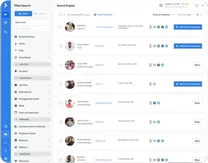
If a vendor claims they understand recruiting, they should be able to find recruiters. Swordfish Prospector lets you search by job title (for example, “Job Title: Recruiter”) so you can test output quality on a known audience before you commit. Use Prospector as a controlled pilot tool, not a demo environment.
Browser workflow fit
If your team sources on LinkedIn, friction matters. The Swordfish Chrome extension reduces copy/paste and keeps sourcing velocity stable, which is what shows up in weekly output.
Decision guide
Buy contact data like an auditor. The invoice is the cheap part. The expensive part is what happens after you import: duplicates, bad merges, opt-out gaps, and a team that stops trusting the data.
Framework: Email-first breaks for hard-to-reach roles
Email-first sequences look tidy in dashboards, then fail quietly when you’re hiring for competitive roles and targeting passive candidates. Addresses decay, inboxes are crowded, and you end up increasing touches to compensate. Adding verified mobiles changes the channel mix so you can reach candidates who won’t reply to recruiter email.
Buying-model comparison (where hidden costs show up)
Credit-based enrichment tends to create rationing behavior: sourcers skip enrichments, managers throttle usage, and pipeline coverage becomes inconsistent. “Unlimited” plans with vague fair use tend to fail under real volume: throttles and soft caps show up after rollout. Database subscriptions tend to create stale exports and CRM pollution unless you invest in dedupe rules and refresh cycles. None of these are “bad” by default, but each has a predictable operational tax.
How to test with your own list (7 steps)
- Define your segments: split your target list by geography, role seniority, and role type so you can see variance instead of averaging it away.
- Lock the workflow: decide where enrichment happens (browser, ATS/CRM, API) and what fields are allowed to write back.
- Set success metrics: track connect rate, reply rate, and response rate. Ignore vendor “accuracy” claims unless they disclose methodology.
- Log outcomes consistently: use the same outcome codes across tools (connected, voicemail, wrong number, bounced email, opt-out) so you can compare providers without hand-waving.
- Track wrong-number rate: it’s the fastest way to see whether “verified” phones are actually usable in real recruiting outreach.
- Audit ranking usefulness: confirm the first ranked number is the one your team should try first, because dialing order drives wasted effort.
- Stress test usage: use the tool the way your team actually works for several days so fair-use constraints show up early.
- Check downstream hygiene: inspect duplicates, merges, and suppression behavior in your ATS/CRM before you scale imports.
Simple 3-touch outreach example (kept consistent for testing)
Touch 1: call the top-ranked number and leave a short voicemail. Touch 2: email referencing the role and why you reached out. Touch 3: call again or send a short SMS with an opt-out line. The business outcome you’re testing is whether ranked mobiles reduce wasted touches and produce earlier conversations.
Checklist: Feature Gap Table
| What buyers think they’re buying | What usually happens in production | Hidden cost / failure mode | What to require (so it doesn’t bite you later) |
|---|---|---|---|
| “Accurate contact data” | Performance varies by role, region, and recency | Wasted touches; teams compensate with more volume; reporting shows activity without conversations | Pilot on your target titles; evaluate by connect rate, reply rate, and response rate, not vendor averages |
| “Mobile numbers included” | Outputs include mixed phone types; the best number may not be first | Dialing order becomes random; sourcers lose trust and stop using the tool | Require ranked outputs that prioritize the best number first and emphasize verified mobiles |
| “Unlimited” | Unlimited is constrained by fair use, throttles, or soft caps | Credit anxiety by another name; inconsistent sourcing volume | Get fair-use constraints in writing; validate under real daily usage |
| “Easy integration” | Field mapping, dedupe, and write-back rules are left to you | Duplicate records, bad merges, and manual cleanup become a weekly tax | Define mapping, dedupe logic, and refresh rules before rollout |
| “Compliance-ready outreach” | Tools provide data; you still own the outreach policy | Inconsistent opt-out handling; escalations; brand damage | Require opt-out capture, suppression handling, and documented legitimate-interest rationale |
Decision Tree: Weighted Checklist
Use this to score tools during a pilot. The weighting logic is based on standard recruiting failure points: data decay, reachability by channel, and downstream operational overhead.
- Verified mobile numbers (highest weight): If you can’t reliably reach passive candidates by phone, you fall back to email-only, and email-only breaks first on hard-to-reach roles.
- Ranking/prioritization of numbers (high weight): If the best number isn’t first, your team burns touches and time. Ranking reduces wasted dials and improves connect efficiency.
- Unlimited credits with fair use that supports daily sourcing (high weight): If usage is penalized, sourcing volume drops or becomes inconsistent, which reduces pipeline coverage.
- Data quality controls (high weight): Without quality gates, you pollute your ATS/CRM and spend time on cleanup. Review data quality expectations before importing at scale.
- Workflow fit (medium weight): If your team sources in the browser, validate enrichment speed and friction using the Swordfish Chrome extension in a normal day of work.
- Compliance + opt-out handling (medium weight): You own compliance. The tool should support suppression so opt-outs are enforceable across future outreach.
- Cost predictability (medium weight): If pricing changes with seat count or API usage, budgets drift. Confirm how unlimited usage is constrained and monitored.
Troubleshooting Table: Conditional Decision Tree
- If you hire for hard-to-reach roles and target passive candidates, then prioritize verified mobiles and ranked numbers first, because email-first degrades fastest under inbox saturation.
- If your team sources daily, then require unlimited credits with fair use that won’t throttle normal recruiting activity, because rationing reduces pipeline coverage.
- If you enrich into an ATS/CRM, then define write-back rules and dedupe logic before rollout, because bad merges create long-term reporting and compliance issues.
- If you operate across regions or industries, then pilot by segment, because variance is driven by geography, industry churn, and recency.
- Stop condition: If the vendor cannot explain in writing how “unlimited” is constrained, how opt-outs are stored and suppressed, and how phone ranking is determined, stop the purchase.
Limitations and edge cases
Variance is not a rounding error. Contact coverage changes with seat count, API usage, list quality, industry, geography, role seniority, and recency. If you don’t segment your pilot, you’ll buy based on an average that doesn’t match your reqs.
Email-first still fits some environments. If your policy or candidate expectations push you toward email-first, accept that you may need more touches to get the same number of conversations. Measure time-to-first-conversation so the drag is visible.
Compliance is a process, not a checkbox. Keep a documented legitimate-interest rationale for recruiting outreach, include opt-out language, and honor opt-outs consistently. Timestamp opt-outs and sync suppression across your ATS/CRM and any sequencing tool so the next refresh doesn’t reintroduce the contact.
Evidence and trust notes
FIELD_NOTE: The hidden cost I see in real teams is trust collapse. Once sourcers hit enough wrong numbers, they stop using the tool, then managers buy another tool to “fix adoption.” The fix is operational: prioritize verified mobiles, rank the best number first, and keep usage predictable so people don’t ration enrichments.
When you evaluate any provider, treat “accuracy” claims as non-comparable unless the vendor discloses the test set and methodology. Your evidence should come from a controlled pilot on your own target titles, with outcomes measured as connect rate, reply rate, response rate, and wrong-number rate.
For related recruiter workflows, see recruiting contact data and candidate phone number lookup.
FAQs
What does “contact data for recruiters” mean if I’m auditing tools?
It means contact info that supports outcomes and doesn’t create cleanup work: verified mobiles for reachability, ranked numbers to reduce wasted dials, and controls that keep your ATS/CRM from filling with duplicates.
Why does email-first break for passive candidates?
Because inboxes are crowded and email addresses decay. For hard-to-reach roles, email-only often produces activity without conversations. Verified mobiles give you a second channel that can reach candidates who ignore recruiter email.
How do I evaluate data quality without trusting vendor metrics?
Pilot on your own target titles and regions, segmented by seniority. Measure connect rate, reply rate, response rate, and wrong-number rate, and inspect downstream hygiene (duplicates, merges, suppression behavior) before scaling imports.
What should I ask about “unlimited credits”?
Ask for the fair-use constraints in writing and validate them under real daily usage. If the vendor can’t explain how limits are enforced, you’ll find out after rollout.
What’s the minimum compliance guidance for recruiting outreach?
Document legitimate interest, include opt-out language, and honor opt-outs consistently. Make opt-outs enforceable by syncing suppression across your ATS/CRM and sequencing tools.
Next steps
- Day 1: Define pilot segments (titles, regions, seniority), success metrics (connect rate, reply rate, response rate), and ATS/CRM write-back rules.
- Days 2–3: Run sourcing in your normal workflow (LinkedIn → enrich → outreach). Use Prospector to test title-based searches on known roles.
- Days 4–7: Review results by segment, not averages. Stress test daily usage so fair-use constraints show up early.
- Week 2: Finalize dedupe and suppression processes, document compliance steps (legitimate interest + opt-out), then scale rollout.
About the Author
Ben Argeband is the Founder and CEO of Swordfish.ai and Heartbeat.ai. With deep expertise in data and SaaS, he has built two successful platforms trusted by over 50,000 sales and recruitment professionals. Ben’s mission is to help teams find direct contact information for hard-to-reach professionals and decision-makers, providing the shortest route to their next win. Connect with Ben on LinkedIn.