
 View Products


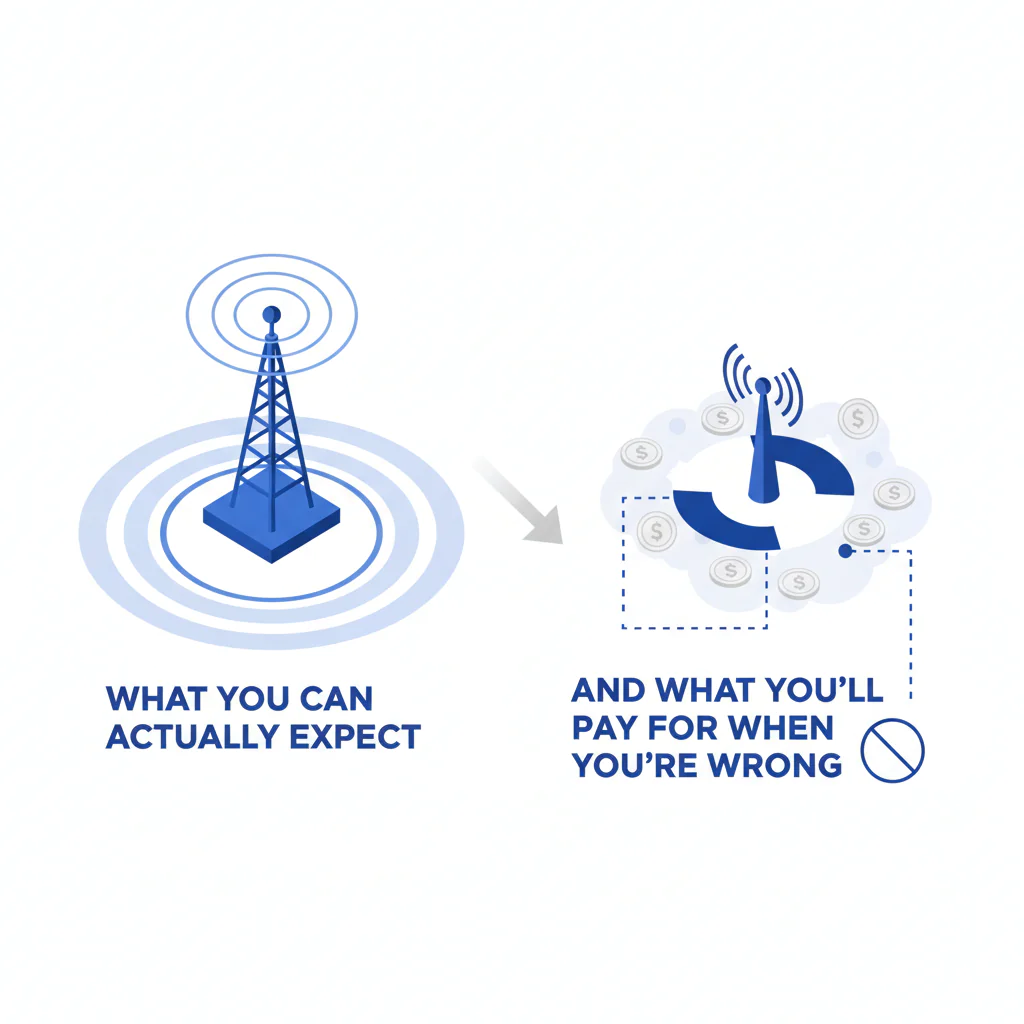
Cell phone data coverage: what you can actually expect (and what you’ll pay for when you’re wrong)
Byline: Ben Argeband, Founder & CEO of Swordfish.AI
Cell phone data coverage is the percentage of your target contacts where a provider can return a mobile number. We don’t publish a single coverage benchmark because it changes with ICP fit, geography, seniority, and data freshness.
The hidden cost is predictable: high “coverage” with low accuracy creates wasted rep time, more retries, and more CRM cleanup. That’s why you evaluate coverage vs accuracy, not “how many numbers showed up.”
Who this is for
Teams evaluating contact data tools for specific industries, regions, and seniority bands who need realistic coverage expectations before committing to seats, API usage, and workflow changes.
Quick verdict
- Core answer
- Cell phone data coverage only matters when you define your ICP fit (industry + geography + seniority) and measure coverage vs accuracy using match rate plus outreach outcomes, not raw “numbers returned.”
- Key stat
- There is no universal coverage percentage that transfers across ICPs; variance is driven by region, seniority, list quality, and data freshness.
- Ideal user
- Operators who want fewer bad dials and less data decay, and who will run a controlled test on their own list before buying.
Decision guide
I audit contact data tools with one framework because it forces reality: Coverage Fit Check: ICP → geography → seniority → volume. If you do it in the wrong order, you’ll optimize for a demo instead of your pipeline.
- ICP: Your industry and roles determine availability and decay. Some segments churn faster; some publish fewer mobiles.
- Geography: Geographic coverage is uneven. If your revenue is concentrated, test that region first.
- Seniority: Senior targets are harder to reach and easier to mislabel. Expect different results by band.
- Volume: Only scale after fit. Scaling bad data just increases wasted activity and refresh costs.
If your enrichment overwrites a known-good number with a stale one, you’ll see more retries and lower connect rates. That’s not a “data problem,” it’s an integration problem you created.
Define the terms before you compare tools
- Data coverage: Whether a number exists for a contact in your target set.
- Match rate: The percentage of your input records where the tool returns a phone number for the intended person.
- Accuracy: The percentage of returned numbers that reach the intended person, as observed through outreach outcomes (for example, call dispositions).
- Data freshness: How quickly coverage and accuracy degrade as people change jobs, carriers recycle numbers, and roles shift.
How to test with your own list (5–8 steps)
If you don’t test on your own list, you’re buying a story. This plan avoids invented benchmarks and forces variance into the open.
- Freeze your ICP definition: write down industry, geography, and seniority bands you will target this quarter.
- Build a representative sample: pull contacts that match your ICP from your CRM or target accounts; keep the segments labeled (industry, region, seniority).
- Clean obvious input issues: fix missing company domains, malformed names, and duplicate contacts so you don’t sabotage match rate.
- Run enrichment/lookup: capture what the tool returns and keep the raw output separate from your CRM until you set field precedence.
- Measure match rate by segment: compare returned vs not returned for each segment, and separate mobile-only from other phone types if your tool returns both.
- Spot-check accuracy: have reps validate a subset through normal calling outcomes and disposition notes; you’re looking for wrong-person matches and dead numbers.
- Check integration behavior: decide which field wins when numbers conflict, how you dedupe, and how you prevent overwriting known-good data with stale data.
- Decide refresh cadence: map decay risk to your sales cycle and sequence length, then align with data refresh frequency expectations.
If accuracy is inconsistent across segments, don’t roll out globally. Fix the ICP scope, refresh cadence, or integration rules first.
What Swordfish does differently
Most tools sell “more numbers” because it looks like coverage. The bill arrives later: reps dial the wrong person, ops teams clean duplicates, and your CRM becomes harder to trust.
Prioritized direct dials and mobile numbers: Swordfish prioritizes the most actionable phone first. That reduces wasted attempts per connect because your team isn’t cycling through a stack of low-confidence options.
True unlimited with fair use: “Unlimited” is where vendors hide throttles and surprise enforcement. Swordfish offers true unlimited with a fair use policy intended for normal prospecting and enrichment workflows. Ask for fair use terms in writing tied to seat count and API usage.
Test coverage for your niche before you commit: Use Prospector’s filtering capabilities to run a targeted sample by industry, geography, and seniority. This turns contact data coverage into something you can verify against your ICP instead of trusting a generic claim.
Source reality: Different contact data sources decay differently. If a vendor can’t explain source categories and how they manage decay, assume you’ll be paying for re-enrichment and cleanup.
Checklist: Feature Gap Table
| What vendors claim | What it often means in practice | Hidden cost you pay | What to ask for (to explain variance) |
|---|---|---|---|
| “High cell phone data coverage” | High count of mobiles returned, regardless of whether they connect to the right person | More dials per meeting; more rep time wasted | Segmented match rate by ICP fit (industry, geography, seniority) and a definition of “covered” |
| “Direct dial coverage” | May include office lines, VoIP, or stale numbers labeled as direct | Sequences built on bad assumptions; higher retry volume | How direct dials are defined, sourced, and refreshed (data freshness) |
| “Data completeness” | More fields filled, even if they don’t improve connects | CRM clutter; dedupe and precedence work | Whether the tool can prioritize the best first number and avoid overwriting known-good fields |
| “Unlimited” | Unlimited until you hit throttles, feature gates, or vague “reasonable use” | Budget surprises; workflow redesign mid-quarter | Fair use terms tied to seat count and API usage, plus enforcement triggers |
| “Strong in your industry” | Strong in one segment, weak in another; the demo sample is cherry-picked | Paying for a dataset optimized for someone else’s industry coverage | Run your own list test and require variance explanation by segment |
Decision Tree: Weighted Checklist
This checklist is weighted by standard failure points that create real cost: wasted rep time, CRM pollution, and integration rework. It avoids fake point systems and forces priorities.
- Highest weight: ICP-fit proof (coverage vs accuracy) — Require a segmented test on your own list. This is the only way to avoid buying mobile data coverage that doesn’t connect.
- Highest weight: Data freshness plan — If the vendor can’t explain decay handling and refresh workflow, you will pay for repeated enrichment and cleanup. Start with data refresh frequency and align it to your sales cycle.
- High weight: Integration behavior — Field precedence, dedupe rules, and conflict handling determine whether your CRM gets cleaner or noisier after rollout.
- High weight: Source category transparency — Understanding contact data sources helps you predict decay and explain why industry coverage varies.
- Medium weight: Best-first-number prioritization — Prioritization reduces wasted attempts per connect because reps don’t have to guess which number is real.
- Medium weight: Pricing tied to usage drivers — Seat count and API usage should map to your workflow. If pricing is vague, assume you’ll find the limits after adoption.
- Lower weight: Extra fields and “completeness” — More fields only help if they reduce cycle time or improve routing. Otherwise they increase cleanup work.
Troubleshooting Table: Conditional Decision Tree
- If your ICP is concentrated in a specific region, then run a geographic coverage test on that region first; else you’ll average away the problem and buy the wrong tool.
- If your target seniority is Director+ and you need mobiles, then require seniority-banded results; else your match rate will be inflated by easier junior roles.
- If you plan to enrich at scale, then confirm fair use assumptions for seat count and API usage in writing; else “unlimited” becomes a throttle when you operationalize it.
- If your team measures success by meetings, then optimize for coverage vs accuracy using connect outcomes; else you’ll pay for volume that doesn’t convert.
- Stop condition: If the vendor cannot run (or allow you to run) an ICP-fit sample test and explain variance drivers (industry coverage, geographic coverage, seniority, list quality, data freshness, seat count, API usage), stop the evaluation.
Limitations and edge cases
Coverage varies by industry/region/seniority: A tool can look strong in one segment and weak in another. Director+ in regulated industries is a different problem than mid-level roles in high-churn segments, and your results will reflect that.
“More numbers” does not mean better connects: Multiple mobiles can inflate perceived coverage while increasing dial waste. If your reps try several wrong numbers before the right one, your cost per meeting rises even if your dashboard looks “complete.”
Match rate depends on your input data quality: Missing domains, inconsistent names, and duplicates lower match rate. That’s your operational problem to fix, and it should be part of the evaluation.
Data freshness is a moving target: Numbers go stale. If you don’t plan refresh, your coverage decays and your team blames the tool when the real issue is time.
Evidence and trust notes
This page is conservative on purpose. Coverage claims are easy to market and expensive to operationalize. The only honest evaluation is a test against your ICP with segment labels and outcome tracking.
Variance explainer (why your results differ from someone else’s): seat count changes how many people are testing and how quickly they hit limits; API usage changes how often you enrich and how quickly you surface decay; list quality changes match rate; industry coverage and geographic coverage change availability; seniority changes exposure and gatekeeping; data freshness changes how quickly “covered” becomes “stale.”
If you want the broader quality framework behind these checks, start with data quality.
Disclosure: I’m the founder of Swordfish.AI. Use the test plan above to pressure-test any provider, including us.
FAQs
What does “cell phone data coverage” mean in plain terms?
It’s the share of your target contacts where a provider can return a mobile number. It is not the same thing as that number being accurate or usable.
What’s the difference between match rate and accuracy?
Match rate is “did the tool return a number for this person.” Accuracy is “does that returned number reach the intended person,” based on outreach outcomes.
Why does coverage vary so much by ICP fit?
Different industries publish different amounts of contact info, different roles have different gatekeeping, and different regions have different availability patterns. Data freshness also varies with job churn and number recycling.
How do I avoid paying for more numbers that don’t help?
Require best-first-number prioritization and measure connect outcomes in a pilot. If the tool increases dial attempts without increasing connects, it’s adding cost.
How do I test a niche segment before buying?
Run a segmented sample by industry, geography, and seniority. Use Prospector’s filtering capabilities to isolate the niche and review match rate and calling outcomes before scaling.
Where can I learn how providers get their data?
Start with contact data sources and ask the vendor which source categories dominate your target segments, because that drives decay and variance.
Next steps
- Day 1: Write down your ICP fit (industry, geography, seniority) and your definitions for coverage, match rate, and accuracy.
- Days 2–3: Pull a representative sample list and label segments; clean duplicates and missing domains.
- Days 4–5: Run enrichment/lookup and measure match rate by segment; spot-check accuracy using rep dispositions.
- Week 2: Decide integration rules (field precedence, dedupe, overwrite policy) and align refresh cadence using data refresh frequency.
- Week 3: Pilot with a small team and track connect outcomes. If connects don’t improve, don’t scale.
If you need a single-person lookup workflow instead of list testing, use cell phone number lookup.
About the Author
Ben Argeband is the Founder and CEO of Swordfish.ai and Heartbeat.ai. With deep expertise in data and SaaS, he has built two successful platforms trusted by over 50,000 sales and recruitment professionals. Ben’s mission is to help teams find direct contact information for hard-to-reach professionals and decision-makers, providing the shortest route to their next win. Connect with Ben on LinkedIn.