
 View Products


Key takeaways
- Lead generation platforms serve different needs, including finding contact details, identifying companies visiting a website, and capturing visitor information.
- Lead qualification helps teams tailor follow-up to a prospect’s level of interest and readiness.
- Responsive design, clear calls to action, useful content, and simple forms can support website lead capture.
- CRM integration can help teams organize lead information and follow up more efficiently.
- Compare platforms based on the problem they solve and the quality of leads they help generate.
Last updated: September 3, 2026

Finding the right prospects online depends on choosing tools that surface accurate contact details, capture visitor interest, and give your sales team useful leads to follow up with. For healthcare organizations, reaching the right clinician or administrator with a verified phone number or email may matter more than lead volume.
This guide walks through eight platforms worth evaluating, what qualifies a lead as sales-ready, and practical steps for turning your own website into a better source of leads rather than just traffic.
Quick List of Lead Generation Websites
Here’s a quick rundown of the top 8 lead generation tools worth comparing:
- Swordfish AI – Best for swiftly finding accurate contact information and seamless integration across platforms.
- Leadfeeder – Best for tracking website visitors with insights into company names and behaviors, integrated with Google Analytics.
- OptinMonster – Best for capturing visitor attention with advanced targeting features and a variety of engagement tools.
- HubSpot – Best for a comprehensive inbound marketing platform with customizable landing pages, forms, and analytics.
- Picreel – Best for capturing leads with exit-intent strategies using engaging pop-ups just as visitors are about to leave.
- AeroLeads – Best for extracting professional contact details from platforms like LinkedIn and CrunchBase.
- BIGContacts – Best for small to mid-sized businesses needing CRM with robust email marketing and sales management tools.
- Vyper – Best for generating leads through creating viral social media competitions and giveaways.
What are Lead Generation Websites?
Lead generation websites are built around one job: getting a visitor to hand over contact information in exchange for something useful, whether that’s a guide, a webinar, a discount, or a free trial.
Once a business has that name, email, or phone number, it can follow up, learn more about what the person actually needs, and work toward turning them into a paying customer.
Lead generation remains a persistent pain point for marketers. 30% of marketers still report generating leads as one of their top challenges in 2026, which underscores why the right lead generation website matters as much as the content strategy behind it.
Using these platforms well gives businesses a better shot at connecting with the right prospects and growing a qualified base instead of a large but unresponsive list.
Categories of Qualified Leads
Not every lead is ready for the same treatment. Understanding where a contact is in the buyer’s journey can help you avoid pitching to someone who’s still researching or sending a ready buyer through unnecessary nurture emails.

Information Qualified Lead (IQL)
At the top of the funnel, we have IQLs. These individuals are in the early stages of their buyer’s journey.
Typically, they’re seeking educational content to help address a challenge or answer a question. In exchange for this information, whether it’s an article, infographic, or another resource, they’re willing to share basic contact details.
Marketing Qualified Lead (MQL)
MQLs have moved past the initial discovery phase. They’ve consumed more specific content, indicating a deeper interest in a product or service.
This could be through actions like downloading a detailed guide, attending a webinar, or engaging with interactive content. While they’ve shown interest, they’re not quite ready for a direct sales approach.
Sales Qualified Lead (SQL)
These are the leads that sales teams love. They’ve been vetted by the marketing team, often through lead scoring systems.
Moreover, they have shown clear purchase intent. They’re ready for a more direct sales approach, be it a product demo, a sales call, or a personalized quote.
Product Qualified Lead (PQL)
PQLs have experienced a product firsthand, often through a trial or freemium version. Their actions within the product, along with their interactions with content and support, can indicate their level of interest.
These signals may suggest potential to upgrade or purchase.
Service Qualified Lead (SQL)
These leads have shown interest in your services, perhaps by booking a consultation or engaging with service-specific content. Plus, they’ve indicated a clear need and are likely looking for a solution tailored to their requirements.
Event Qualified Lead (EQL)
EQLs have engaged with a brand through events, be it virtual webinars, workshops, or physical trade shows. Their participation, questions, or follow-up actions post-event signal a deeper interest in the offerings.
Referral Qualified Lead (RQL)
Now, these leads come through recommendations. Whether referred by existing customers, partners, or other external sources, RQLs often have a higher trust level and a shorter sales cycle due to the credibility of the referral source.
Inbound Qualified Lead (IQL)
Last but not least, these are leads that come directly to you, often through organic search, direct website visits, or social media interactions. They’ve taken the initiative to seek out your brand, indicating a proactive interest in what you offer.
Tips to Optimize Your Website For Lead Generation

Your website is the front door to your business. If it’s not built to capture information, it’s just decoration. Here are ten areas worth auditing to turn it into a lead-capturing asset.
Responsive Design
Your website must adapt seamlessly to various screen sizes. A responsive design makes sure that whether someone visits your site from a desktop, tablet, or mobile phone, they have a smooth and consistent experience.
A mobile-friendly website can also support a better search experience and may help with search visibility.
Clear Call-to-Action (CTA)
Your CTA is the guiding light for your visitors. It should stand out and instruct visitors on what you’d like them to do next.
Whether it’s “Sign Up,” “Download Now,” or “Get Started,” ensure it’s compelling and placed prominently on your page.
Engaging Content
Your content should resonate with your audience. By providing informative blog posts, videos, or infographics that address common questions or challenges your audience faces, you position your brand as a trusted resource.
Quality content can also improve your site’s SEO, driving more organic traffic.
User-friendly Navigation
A confusing website can deter potential leads. Make sure your site’s layout is intuitive, with a clear menu structure and easily accessible information.
An intuitive layout can improve the user experience and may reduce bounce rates.
Integration with CRM
Once a visitor becomes a lead, it’s vital to manage that relationship. By integrating your website with a CRM system, you can automatically store and categorize lead information.
This can make follow-ups more streamlined and personalized. For healthcare organizations, handle contact information in line with applicable privacy and recordkeeping requirements.
Fast Loading Times
Slow websites can frustrate visitors and lead to higher bounce rates. Optimize images, use browser caching, and consider a content delivery network (CDN) to speed up delivery.
Trust Signals
Display testimonials, reviews, and certifications prominently. These act as social proof and can reassure visitors of your credibility and the quality of your product or service.
Optimized Forms
Keep lead capture forms short and straightforward. Ask only for essential information to reduce friction.
Progressive profiling can help gather more data over time without overwhelming first-time visitors.
Retargeting Capabilities
Not every visitor will convert on their first visit. You can display relevant ads to previous visitors as they browse other sites by using retargeting tools and pixels.
Then, you can remind them to return and take action.
Regular Testing and Analysis
The digital landscape is ever-evolving. Regularly test different elements of your site, from CTAs to images, to see what resonates most with your audience.
Use tools like Google Analytics to track performance and make informed decisions.
Top 8 Lead Generation Website Examples To Gather Quality Leads
Capturing the attention of potential customers has become both an art and a science. The right tools can make the difference between a thriving pipeline and one that’s struggling to find its audience.
Here’s a closer look at eight platforms that consistently come up in lead generation comparisons.
Swordfish AI

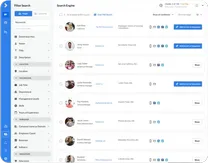
For the first one, it’s Swordfish AI. Swordfish is built for businesses that need to find contact information quickly, whether that’s email addresses, phone numbers, or other vital contact details, drawing on a broad set of data sources to surface accurate, up-to-date information.
Its integration capabilities let you access data across platforms your team already uses, which can reduce manual lookups during lead generation. For teams where a verified direct line matters, that may help them reach the right person and avoid chasing an outdated number.
Leadfeeder

Leadfeeder tracks website visits and can identify companies behind some business website traffic, as well as show which pages they explored.
That level of detail turns anonymous visits into a clearer picture of who’s interested and what specifically caught their attention.
The article describes Leadfeeder as integrating with Google Analytics to add visitor behavior data to its own tracking and provide a fuller view of how people move through a site.
With that information, sales and marketing teams can tailor their outreach instead of guessing, which tends to raise the odds of a meaningful first conversation.
Leadfeeder Cost
Pricing is worth checking before committing, since plans vary by traffic volume and feature set. Businesses of different sizes can typically find an option that fits their budget, from small teams testing the tool to larger sales organizations running it at scale.
OptinMonster

Engagement is the focus for OptinMonster. This platform offers a range of tools, from pop-ups to floating bars, designed to capture visitor attention at the right moment.
What sets it apart is its targeting logic, which aims to put the right message in front of the right visitor rather than showing the same offer to everyone.
HubSpot

HubSpot is one of the more established names in inbound marketing. It’s not a single tool but a broader platform covering content management, email marketing, and lead capture in one place.
The lead generation features include customizable landing pages tailored to your audience, forms that capture lead information, and pop-ups that engage visitors.
The analytics layer gives teams the data needed to see what’s actually converting, which helps refine campaigns instead of running on assumptions.
Picreel

In online marketing, timing matters. Picreel focuses on exit-intent strategies, showing a pop-up or form right as a visitor is about to leave the page.
It gives businesses one more shot at capturing that visitor’s information before they’re gone, similar to a last pitch as a customer is heading for the door.
AeroLeads

Professional networking platforms like LinkedIn have become a rich source of leads. AeroLeads pulls from platforms like LinkedIn and CrunchBase to find work emails and other contact information.
It functions like a research assistant for the corporate world, helping teams track down the right contact details instead of guessing at an email format. Discover AeroLeads Affordable Plans for Effective Customer Connections.
Note: Look into other tools as alternatives for AeroLeads.
BIGContacts

At its core, BIGContacts is a CRM tool, but it covers more ground than customer relationship management alone. It also includes email marketing features and sales management tools.
The platform is built with small to mid-sized businesses in mind, giving smaller lead generation teams the resources to compete against larger, better-funded rivals.
Vyper

Social platforms have changed how brands engage audiences, and Vyper builds on that shift with tools for creating viral competitions and giveaways. It’s not just about capturing an email address.
It’s about getting people involved enough that they end up promoting the brand themselves.
The Bottom Line
Lead generation websites are a practical bridge between a business and its next customer, turning casual visitors into contacts worth following up on.
The right platform doesn’t just add names to a list. It gives sales and marketing teams the context, timing, and contact accuracy needed to move a prospect forward instead of losing them at the first form fill.
Match the tool to the problem you need to solve, whether that’s finding contact details, identifying companies visiting your site, or capturing attention before someone leaves. Then assess performance using lead quality and conversion results, not just the number of contacts collected.
FAQs
Are lead generation websites expensive?
Costs vary. Some platforms offer free tiers, while others charge based on the number of leads generated or features accessed. It’s worth evaluating the return relative to lead quality, not just the upfront price.
How do I measure the success of my lead generation website?
Track metrics like the number of visitors, conversion rates, and the quality of leads generated. Tools like Google Analytics can provide useful insight into where those leads are coming from and how they behave.
Can I customize my lead generation website?
Most platforms offer customization options to align with your brand and business needs, ranging from visual changes to integrating specific tools and features.
Is the information collected by lead generation websites secure?
Reputable platforms generally prioritize data security, but this varies by vendor. Confirm that any platform you choose complies with applicable data protection regulations and uses encryption, especially if you’re collecting contact details tied to regulated industries like healthcare.